Recently, the US Department of Commerce issued a directive to the leading electronic design automation companies in the United States and EuropeEDA software suppliers cease selling products to China without obtaining an export license.
This move marks that the Trump administration is taking measures to further hinder China's technological progress, especially in the field of advanced semiconductor research and development, demonstrating greater determination.
As a key link in the global semiconductor supply chain,EDA software assists designers and manufacturers in developing and testing complex integrated circuits, which provide core power for various devices such as smartphones and artificial intelligence systems.
The latest policy trend shows that the scope of relevant restrictions has been expanded compared to before, in the United StatesCadence、Synopsys and mainstream EDA companies such as Siemens EDA in Germany are required to implement a license application system for their full range of products sold to China and follow a case by case review process.
After two days of market rumors fermenting, the two major chips in the United StatesEDA leading companies Synopsys and Cadence have officially confirmed that the US Department of Commerce's Bureau of Industry and Security (BIS) has requested both companies to suspend the supply of chip design EDA software tools to the Chinese market.
local timeOn May 29th, Synopsys (NASDAQ: SNPS) announced that it had received a letter from BIS regarding new export restrictions on its involvement in the Chinese market, following the disclosure of its second quarter financial results on May 28th. Currently, Synopsys is evaluating the potential impact of this policy on its business operations, financial performance, and financial condition.
It is worth noting that,Synopsys also announced the suspension and withdrawal of financial guidance originally scheduled for the third quarter and full year of fiscal year 2025.
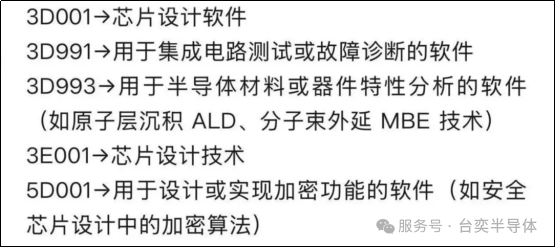
during this periodCadence Design Systems (NASDAQ: CDNS) submitted an 8-K filing to the US Securities and Exchange Commission (SEC) on the 29th, stating that on May 23rd local time, the US Department of Commerce's BIS notified Cadence that when one party to the transaction is a Chinese entity or a Chinese "military end-user," electronic design automation software and technology with Export Control Classification Numbers (ECCNs) 3D991 and 3E991 on the Commercial Control List must apply for a license for export, re export, or domestic transfer. BIS pointed out in the letter that the risk of these goods being used in China or China's "military end-users" or transferred to "military end-users" has reached an unacceptable level.
Previously, althoughSiemens EDA (formerly known as Mentor) has not officially released any related statements, but there is information indicating that it has received similar notifications from BIS and has issued instructions to multiple customers in China to initiate the verification process for EDA software demand in the Chinese market. Some software upgrade services have also been discontinued. Siemens mentioned in a statement that its EDA business became aware of the new export control measures last Friday. The company stated that it has provided support to Chinese customers for over 150 years and will continue to work with global customers to mitigate the impact of new restrictions while complying with export control systems in various countries.
This situation indicates that occupying the Chinese marketMore than 80% of the chip "EDA Big Three" will have their new products "cut off" to some Chinese customers. However, according to the analysis of existing announcements from Synopsys and Cadence, the target of BIS export controls this time may only be Chinese companies listed as "military end-users" (such as SMIC), and existing EDA software that has been purchased can still be used. Therefore, the scale of this round of "power outage" is significantly reduced compared to the previously rumored "comprehensive suspension of EDA services", and the impact on the Chinese semiconductor industry is relatively small.
There is a clear differentiation phenomenon in the capital market: chips in the past two daysThe stock prices of the EDA industry are showing a trend of "rising in the east and falling in the west" - the stock prices of American EDA giants such as Cadence and Synopsys have cumulatively fallen by more than 10%, while two domestic EDA companies, Huada Jiutian and Ganlun Electronics, have achieved gains of 15% and 20% respectively.
overseasEDA giant's annual revenue in China exceeds 10 billion yuan, with a market share of over 80%
Electronic design automation(Electronic Design Automation, EDA, abbreviated as EDA, plays a key role in the semiconductor field. As an indispensable core link in the chip design process, EDA integrates software tools from functional planning, circuit wiring to design verification, forming the most upstream and technically high barrier core link in the integrated circuit industry. It can be regarded as the "strategic cornerstone" that leverages the trillion level semiconductor industry chain, and is therefore given an important position as the "mother of chips" by the industry.
According to the International Semiconductor Industry Association(According to data released by SEMI, the global chip EDA software market size reached $13.437 billion in 2022, a slight increase of 1.8% compared to the previous year. Industry institutions predict that this number will climb to $14.526 billion in 2023. Focusing on the market of Chinese Mainland, according to the data of Smart Research, the scale of China's EDA software market will reach 11.56 billion yuan in 2022, with a year-on-year growth of 11.8%, and it is expected to further grow to 13.05 billion yuan in 2023.
From the perspective of the global competitive landscape,Synopsys, Cadence, and Siemens have formed an oligopoly monopoly pattern, occupying 32%, 29%, and 13% of the global EDA market respectively, with a total market share of up to 74%. This concentration is more significant in the Chinese market - the three giants occupy over 80% of the domestic EDA market share. According to the company's financial report data, Synopsys' sales in the Chinese market in fiscal year 2024 are close to $1 billion, accounting for 16% of its global total revenue; Cadence's sales in the Chinese market during the same period were 550 million US dollars, accounting for 12%, and the combined revenue of the two companies in China exceeded 10 billion yuan.
Professor Zhang Wei, Dean of the School of Microelectronics at Fudan University, once pointed out that chipsEDA technology is a strategic location in the integrated circuit industry and has become one of the most critical bottlenecks in the development of China's integrated circuit industry in the current international situation. Although China has initially established a domestic EDA ecosystem, it is still in a fragile stage and urgently needs to strengthen technological breakthroughs and ecological cultivation.
It is worth noting that this export restriction involves the United StatesEDA companies are required to comply with the classification codes ECCN 3D001, 3D991, and 3E001 in the Business Control List, with restrictions on Chinese companies listed as "military end-users". This policy direction indicates that American companies may not necessarily implement a comprehensive cut-off, and are more likely to impose precise restrictions on specific companies or certain types of tools, rather than systematically cutting off technology supply.
The US Department of CommerceOn May 28th, it was announced that it is "reviewing exports to China that have strategic significance" and stated that "in some cases, the Ministry of Commerce has suspended existing export licenses or added additional licensing requirements during the review period". However, the spokesperson of the Ministry of Commerce did not provide any explanation regarding the specific companies involved.
Synopsys CEO Sassine Ghazi revealed during a conference call after the financial report on the 28th that the company has not yet received any relevant letter from BIS. Based on past experience, we have different perspectives on this matter. Some believe that we have grasped the relevant dynamics, some remain vigilant, and some believe that we have not yet reached the level of vigilance. The reason why I explained in advance is that I have noticed the relevant reports and speculations, and currently we have not received any information from BIS. We cannot speculate on the reason for the non receipt, we can only confirm the current status. "
As ofIn the second quarter of April 30th, Synopsys' growth in the Chinese market showed a slowing trend. About 10% of its quarterly revenue of $1.6 billion comes from Chinese customers. When talking about the Chinese market, the company pointed out that the Chinese government has introduced policies to support local enterprises, seeking to develop independent chip design technology while also providing support for investment funds.
Looking back, we have been in communication since the 2024 fiscal year, observing the cumulative effect of China's restrictive measures and changes in the domestic macro environment, which has prompted us to continue sending signals that the slowdown in growth will continue. In each quarter of the past year and a half, this resistance has shown a gradually increasing trend. Synopsys stated that considering the year-on-year decline in revenue in the Chinese market, revenue in the 2025 fiscal year will decrease compared to the 2024 fiscal year. Nevertheless, we still reiterate our full year performance guidance. This is due to our efficient execution in other regions and the strong performance of our investment portfolio, and we are confident in reiterating our full year performance guidance
It is worth noting that,On May 29th, the Federal Trade Commission (FTC) announced that it will require Synopsys and Ansys to divest some of their assets to drive their $35 billion merger plan. At present, Xinsi Technology has sold optical and photon software tools to Keysight Technologies Inc., an electronic testing and measurement company, and Ansys will also sell a power analysis product to the company. Synopsys has revealed that it is advancing its acquisition of Ansys and has obtained regulatory approval in some jurisdictions. It is also in communication with China to obtain approval and is expected to complete the acquisition in the first half of this year.
Fuguo Bank analyst Quatron(Joe Quatrochi maintains an "equally weighted" rating on New Thinking Technology with a target stock price of $520. He pointed out that despite the escalating geopolitical and trade tensions, negotiations for the acquisition deal are still ongoing. In addition, Synopsys' AI related design activities remain strong, while the non AI market remains sluggish, and there are signs of slight stabilization in the industrial/automotive terminal market. Driven by the increase in intellectual property (IP) and hardware unit production capacity, demand in the second half of 2025 may slightly improve compared to the first half.
Morgan Stanley maintains its support for New Thinking TechnologyRated as' increase holdings' with a target price of $590, the company stated that its second quarter sales were in line with expectations and profits had improved, but its third quarter profit expectations were weaker than expected. At the same time, it was added that the Trump administration may require EDA companies to stop shipping tools to China, which the company had previously underestimated to a large extent.
Market research institutionsEthan Qi, Deputy Director of Research at Counterpoint, analyzed that the technical threshold for EDA software is not as high as that of lithography machines. In fact, EDA software manufacturers are highly dependent on chip design companies and continuously improve their product competitiveness through cooperation and joint debugging with chip design companies. For example, in the early stage of chip design, as long as the leading chip design company tries to use domestic EDA and opens up the design library to domestic manufacturers, the ability of domestic EDA can be rapidly improved in about two years. For foreign EDA manufacturers, once customers are lost, it is difficult to recover, which is a factor they need to consider comprehensively. Therefore, they will also communicate with the US government to strive for more favorable policies. Ethan emphasized.
Over the past five years, the localization rate has exceeded expectations14%, mergers and acquisitions in China's EDA industry are accelerating
selfSince 2018, the sanctions imposed by the United States on Chinese EDA technology have shown a stepped up trend. Initially, technology restrictions were proposed within the framework of the trade war, and subsequently Chinese companies such as Huawei and SMIC were included in the entity list to restrict their access to high-end EDA software.
In 2020, the United States further tightened its export control rules for EDA software tools, especially for design software with advanced processes of 7nm and below, strictly controlling technology transfer and cooperation channels. By 2023, the United States will increase the intensity of sanctions against Chinese EDA companies, promote the formation of a technology blockade in the global market, and objectively accelerate the development and replacement process of domestically produced EDA tools in China.
At the level of domestic industrial ecology, with the increasing support of China for the integrated circuit industry, domestic chips have been developed in the past five yearsThe number of EDA enterprises has surged from 10 to over 120. From 2018 to 2020, the localization rate of EDA increased from 6.24% to 11.48%. According to industry predictions, the annual compound growth rate of the domestic EDA market from 2021 to 2025 will exceed 14%, significantly higher than the global market growth level.
It is worth noting that currently overseasThe three major EDA giants generally adopt a "buyout software IP" technology supply model, and the slowdown in their revenue growth directly reflects a significant contraction in customer demand. In contrast, although the domestic EDA market has not shown explosive growth, its penetration rate remains stable at around 10%.
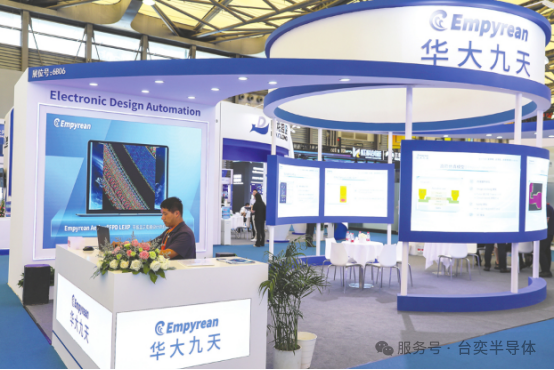
According to data from CCID Think Tank,In 2020, Huada Jiutian's revenue accounted for about 6% of the Chinese EDA market, and its market share in the domestic EDA field exceeded 50%, firmly ranking first in the local industry. As the only domestic enterprise that can provide full process EDA tools for analog circuit design, its products cover key areas such as flat panel displays, analog IC design, and digital SoC design.
Nine Days from HuadaAccording to the 2024 interim financial report, the operating revenue for the first half of the year was 444 million yuan, a year-on-year increase of 9.62%. However, the net profit attributable to shareholders of the listed company was only 37.8713 million yuan, a year-on-year decrease of 54.81%. This performance is mainly due to the company's high-intensity investment in research and development - the R&D investment in the EDA field reached 349 million yuan in the first half of the year, accounting for a relatively high proportion of operating income.
According to the company's disclosure, the relevant investment is mainly used in the field of integrated circuit design and manufacturingThe development of EDA tools aims to gain future market share and technological leadership advantages through technological accumulation.
It is reported that Huada Jiutian has publicly stated that the company claims to support some digital toolsThe 5nm process means that these tools have been commercialized and implemented. In the field of analog circuits and fully customized design, enterprises are making every effort to promote the research and development of simulation design full process systems that support advanced processes. Based on the simulation full process system, they are developing a full process toolchain for the fully customized field, covering key links such as storage chip design full process, RF circuit design full process, optoelectronic integration design full process, and advanced packaging design.
In the field of digital circuit design, Huada Jiutian has previously revealed that all of its existing digital tools support it7nm process node. To further deepen the technological integration with advanced processes, the company is increasing its investment in the research and development of core tools in the digital field, gradually filling the technical gaps in digital core tools, and continuously improving its strategic layout in the digital design field. At the same time, in response to the rapidly growing market demand in the field of wafer manufacturing, enterprises are simultaneously conducting research and development work on core tools related to wafer manufacturing, continuously strengthening their technical support capabilities for wafer manufacturing enterprises.
Talking about domestic productionThe differentiated development path of EDA vendors, "said Wang Lingfeng, a senior analyst at Jiwei Consulting," Huada Jiutian's business focus is on the field of digital circuit design, and a relatively complete digital EDA solution has been formed in front-end design and some back-end processes; Kenlun Electronics' EDA products focus on the field of analog circuit design; Guangliwei focuses on the research and development of EDA verification tools. Overall, the three top manufacturers currently do not have the ability to independently build a full process EDA toolchain. From the perspective of industrial ecology, by combining the single point tools of multiple domestic EDA enterprises, it is theoretically possible to cover the entire process of chip design, but there are still weak areas of capability in some segmented fields. ”
Wang Lingfeng further emphasized:The US Department of Commerce is strengthening export controls through a licensing system, with the core intention of strictly controlling the development and design of artificial intelligence related chips, and further tightening the technology blockade on physical list companies. In this context, the so-called 'comprehensive supply cut-off' is not a high probability event, and the US is more inclined to achieve strategic goals through precise control
Currently, domestically producedEDA enterprises have initiated a capital driven process of industrial integration. On March 31st, Huada Jiutian announced its intention to acquire 100% equity of Xinhe Semiconductor through issuing shares and paying cash, and simultaneously raise matching funds; On April 12th, Jielun Electronics disclosed its plan to acquire 100% equity of Ruichengxinwei and 45.64% equity of Nanengwei through issuing shares and paying cash, while initiating supporting financing.
Although domesticallyThe EDA industry still faces core technological bottlenecks, but with the increasing policy support for the semiconductor industry and sustained growth in research and development investment, local enterprises are gradually narrowing the gap with international leading levels through technological breakthroughs. Minsheng Securities analysis points out that the two leading domestic EDA companies have launched intensive acquisition plans, marking a significant acceleration in the pace of industry integration. The technological capabilities of domestic EDA and IP manufacturers are expected to achieve a leapfrog improvement through resource integration.
According to the prediction of the China Semiconductor Industry Association,By 2025, the size of China's EDA market will increase to 18.49 billion yuan, accounting for 18.1% of the global market share. In response to the abuse of export control measures by the US, a spokesperson for the Chinese Ministry of Commerce has previously stated that the US actions seriously harm the legitimate rights and interests of Chinese enterprises, pose a serious threat to the security and stability of the global semiconductor industry and supply chain, and greatly impact the global scientific and technological innovation ecosystem. Using unilateral protectionist measures to curb the development of other countries not only fails to enhance its own competitiveness, but also harms the interests of American industries, ultimately leading to self inflicted consequences. China warns the US that if it continues to harm China's interests and acts unilaterally, China will take resolute and effective measures to safeguard its legitimate rights and interests.

 CN
CN EN
EN