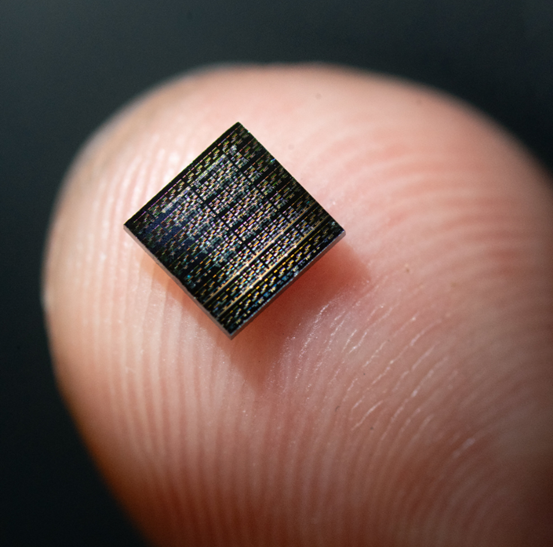
according toOhioState University'sThe latestresearchThe results showed that using shiitake mushrooms instead of silicon-based architectureNew type of memristorThe technology has become possible, thisUtilizing biodegradable substrates to advance low-power neuromorphic hardwareThe research has broad prospects.
In a new study that crosses the frontiers of sustainability and neuromorphic computing, researchers from Ohio State University,A functional memristor was manufactured using mushroom myceliumtheseThe ability of "living" memristors to perform learning like behavior suggests that future computing matrices may possess characteristics such as biodegradability, self growth, and environmental friendliness.
Researchers believe that fungal memristors can serve as useful interfaces for high-frequency bioelectronics.
The research paper of the teamA reproducible and low-cost fungal based storage element cultivation and testing method was outlined. The potential application scope of this research is extensive, covering fields such as artificial intelligence hardware to aerospace electronic products, and is expected to become an important milestone in the development history of biological computers.
Utilizing fungal networksBuild architecture
The core of this study lies in utilizing the branching filamentous mycelial network of mushroom mycelium, which is renowned for its structural integrity and biological intelligence. In a series of control experiments, shiitake mushroom spores were cultured in nutrient rich medium until the mycelium covered the entire culture dish. After the mycelium is fully developed, it is dehydrated to form a stable disc-shaped structure, and then rehydrated to restore its conductivity.
Each sample grows a mycelial network and is connected to traditional electronic components.
Researchers connected these recombinant fungal samples to conventional electronic devices and evaluated their memristive properties. They applied a series of voltage inputs to the sample while recording the current at different frequencies-Voltage characteristics. As predicted by the memristor theory, the fungal matrix exhibits a contracted hysteresis loop, especially at low frequencies and high voltages, indicating that its resistance state is variable, similar to synaptic plasticity in the biological brain.
In10 Hz、 Under a sine wave signal with a peak to peak value of 5V, the precision of the sample's memristor reached 95%, achieving outstanding results. Even at high frequencies up to 5.85 kHz, these devices maintain 90% accuracy, making them an ideal choice for real-time computing applications.
In addition to static memory testing, the research team also designed a system based onA customized testing platform for Arduino to evaluate the potential of fungal memristors as volatile memory. By applying controllable pulses and measuring voltage thresholds, they confirmed that these devices can instantly store and recall data, which is a key requirement for integrating them into neuromorphic circuits.
Fungal memristor
The core of this study is the fungal memristor. Traditional memristors rely on inorganic materials such as titanium dioxide or rare earth metals, while fungal memristors utilize the natural conductive properties of biological structures.
After processing, the mycelium of shiitake mushrooms presents a hierarchical porous carbon structure, which significantly enhances their electrochemical activity. The internal structure of mycelium provides dynamic conductive pathways that form and dissolve in response to electrical signal input. These characteristics are highly similar to ion based mechanisms in neurons, making fungal memristors an ideal choice for simulating computing tasks.
During the measurement process,10 Hz noise waveform of 1 Vpp sine wave.
In addition, due to their complete biodegradability and origin from renewable biomass, these devices avoid many environmentally related costs in the semiconductor manufacturing process. No need for cleanrooms, etching chemicals, or mining critical materials——Just need a controllable growth chamber, some agricultural substrate, and time.
This simplicity masks their potential complexity. These fungal circuits can be used in edge computing, intelligent sensors, even autonomous robots and other fields. They can be used wherever lightweight, low-power and adaptive processors are needed. They also open up promising application prospects for distributed environment sensing, as these devices can be harmlessly decomposed after use.
The future of mycelium?
In addition to its excellent electrical properties, the biological resilience of shiitake mushrooms also makes it a strong competitor in extreme application fields. It is known that shiitake mushrooms can tolerate ionizing radiation, which makes fungal electronic devices potentially applicable in the aerospace industry, as cosmic radiation typically reduces the reliability of semiconductors.
In addition, the mycelium of shiitake mushrooms can maintain its function during dehydration and rehydration processes, which further enhances its application potential. In the experiment at Ohio State University, the dehydrated sample was able to maintain its predetermined resistance state and restore its function after rehydration, indicating that this method has the potential to be applied to the transportation, storage, and even transmission of bioelectronic components.
Although this research is still in its early stages, it marks a crucial step towards integrating biological organisms into functional computing systems. A research team from Ohio State University has demonstrated that computing components do not need to be etched onto silicon wafers, but can grow, dry, and connect into circuits by cultivating memristive properties in edible fungi.

 CN
CN EN
EN